FROM MIAMI — There is a specific kind of electricity that only ringside in Miami can generate—a humid, heavy air thick with the scent of saltwater, cologne, and the palpable desperation of the fight game. But at BKB 50, the atmosphere shifted from mere excitement to something altogether more historic.
Among the neon lights and the blood-spattered canvas, a ghost from boxing’s golden Cuban era appeared. Yuriorkis Gamboa, “El Ciclón de Guantánamo,” and he was not just there to spectate. He was there to sign.
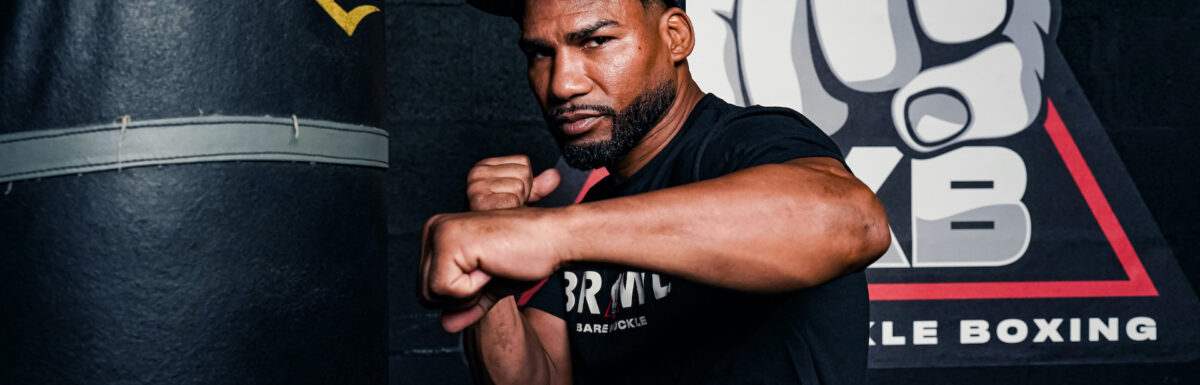
In a landmark move, Gamboa has put pen to paper on a multi-fight, multi-year deal with BKB Bareknuckle. At 44, the Olympic gold medalist and former unified world champion is trading the padded sanctuary of the ten-ounce glove for the raw, unforgiving reality of the bareknuckle.
There is great pedigree in this warrior: I’ve watched Gamboa for two decades. I saw the blur of hand speed that mesmerized Orlando Salido; I witnessed the defiant, chin-tucked bravery when he rocked Terence Crawford in 2014—a night “Bud” still cites as his toughest examination, against his opponent with the “heaviest punch”.
But bare-knuckle is a different beast entirely. It is the oldest form of boxing, as Gamboa has himself noted through a grin that has weathered many a storm.
“After winning an Olympic gold medal and world championships, I am focused on becoming a BKB world champion,” Gamboa told BKB’s owner Mike Vazquez. “I’m going to show why I belong at the top.”
Will this be a high-stakes gamble for Gamboa ? There will be detractors. There always are when a legend of the “sweet science” enters the “noble art” of the bare fist. They will point to his age and his recent inactivity since that 2022 loss to Isaac ‘Pitbull’ Cruz.
Yet, watching him move through the crowds at BKB 50, there was a sparkle in the eye of the Cuban defector that suggested the fire hasn’t just been rekindled—it’s more a conflagration.
BKB CEO/President David Tetreault called it a “game-changer,” and he is not wrong. By bringing in a man with Gamboa’s amateur and professional lineage, BKB isn’t just buying a name; they are buying a masterclass in distance and timing.
So here are the Risks vs. the Reality. In BKB, the danger isn’t just the concussion; it’s the laceration. Gamboa’s veteran skin will be tested by the friction of bone on bone.
And what about the speed? If “El Ciclón” has retained even sixty percent of that trademark Cuban velocity, the current BKB roster is in for a very short, very painful night.
And the legacy? He joins the likes of Paulie Malignaggi in proving that the transition isn’t a “fall off,” but a tactical evolution.
My verdict is this: Miami has always been Gamboa’s second home, the place where the Cuban dream met the American reality. Seeing him sign this deal under the Florida sun (albeit colder than it has been for a few decades) felt like a homecoming of sorts.
Bare-knuckle boxing requires a specific brand of “unfiltered grit,” a commodity Gamboa has possessed since he was a boy in Guantánamo.
Is it dangerous? Immensely. Is it compelling? Absolutely. Whether he captures a new belt or goes out on his shield, one thing is certain: when the bandages come off and the fists are bare, the world will be watching “El Ciclón” one more time.